


Caledonia Mining Corporation Plc: Motapa Exploration Results
ACCESS Newswire
10 Jun 2026, 11:33 GMT+10
High-Grade Drill Results Demonstrate Potential to Extend Bilboes Mine Life
(NYSE American:CMCL)(AIM:CMCL)(VFEX:CMCL)
SAINT HELIER, JE / ACCESS Newswire / June 10, 2026 / Caledonia Mining Corporation Plc ("Caledonia" or "the Company") is pleased to announce results from its 2025 exploration program at the Motapa exploration property.
The results demonstrate the presence of significant gold mineralisation across multiple zones and highlight the opportunity for Motapa to evolve into a strategic extension of the Bilboes mining complex, potentially enhancing production and extending the life of mine at Bilboes through the development of a combined mining operation.
Motapa lies directly adjacent to the Bilboes Gold Project, where Caledonia is advancing plans for a major open-pit operation based on proven and probable reserves of 1.75 million ounces of gold in 24.1 million tonnes of ore at an average of 2.26g/t1. The close proximity of the two projects offers potential for shared infrastructure and operational synergies, which could enhance project economics and reduce capital intensity over time.
Exploration results summary
The 2025 drilling programme focused on testing the continuation of sulphide mineralisation below the historic oxide open pits, as well as identifying new mineralised zones across the property.
Drilling has confirmed:
Continuity of mineralisation along a strike length of approximately 6km within the Bubi Greenstone Belt
Multiple mineralised shear zones across Motapa North, Central and South
Both oxide and sulphide mineralisation, supporting near-term and longer-term development potential
1 See "Bilboes Gold Project Technical Report Summary" with effective date October 31, 2025 prepared by DRA Projects (Pty) Ltd and filed by the Company on EDGAR as an exhibit to a Form 6-K Report of Foreign Private Issuer on November 24, 2025
Based on results to date, Caledonia expects to publish a maiden mineral resource estimate for portions of Motapa in Q3 2026, representing a key milestone in evaluating the project's contribution to the broader Bilboes development strategy.
Drilling Highlights
Selected drilling highlights to date from Motapa North include:
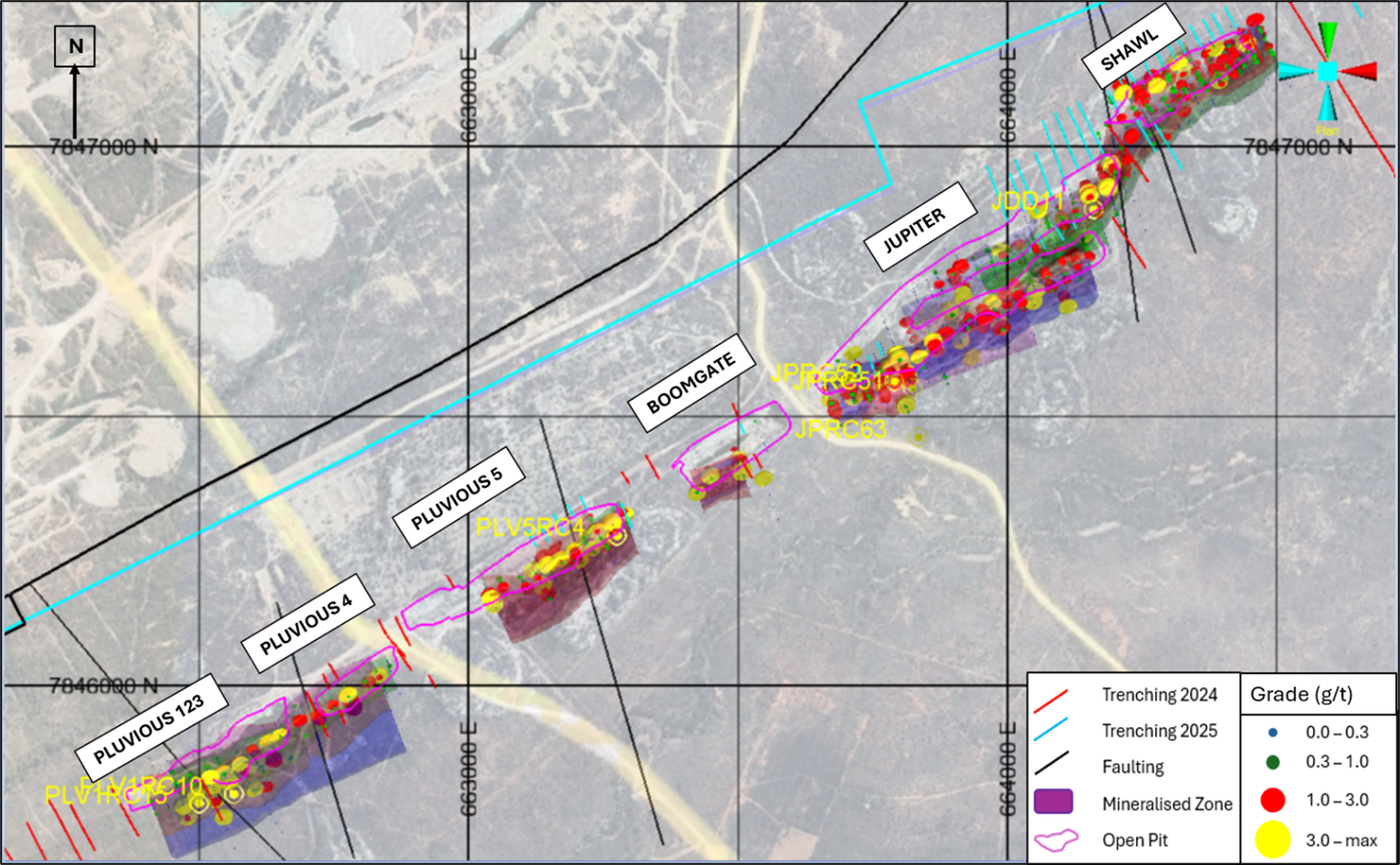
19.00 meters ("m")* at 8.08g/t (Hole JPRC52)
6.38m* at 13.95g/t (Hole JDD11)
12.00m* at 7.12g/t (Hole JPRC63)
14.00m* at 4.31g/t (Hole PLV5RC4)
17.00m* at 3.25g/t (Hole JPRC51)
13.00m* at 3.72g/t (Hole PLV1RC10)
6.00m* at 6.89g/t (Hole PLV1RC15)
Selected drilling highlights to date from Motapa Central (Mpudzi) include:
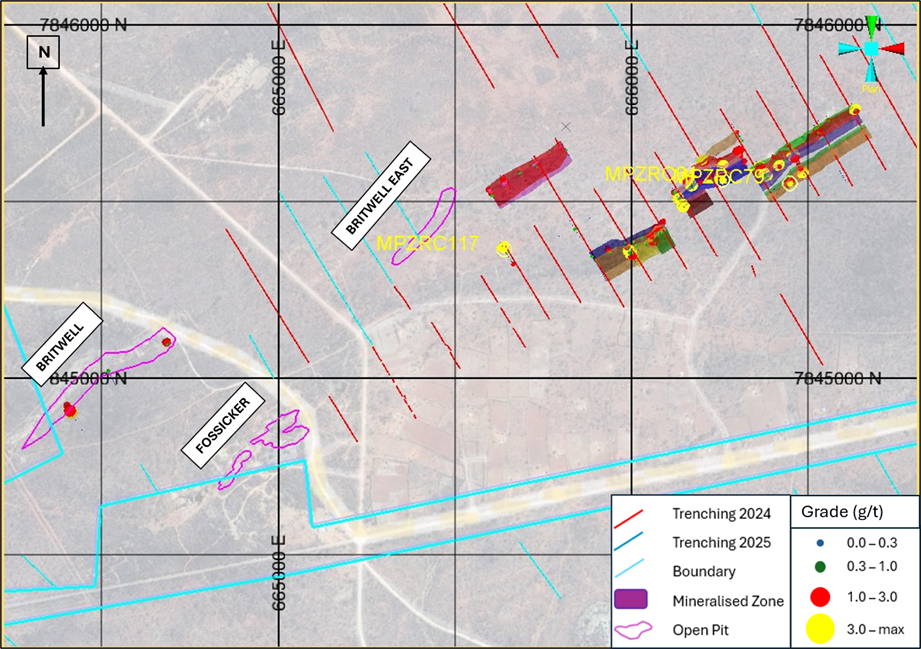
7.00m* at 2.39g/t (Hole MPZRC79)
3.00m* at 4.79g/t (Hole MPZRC64)
2.00m* at 5.25g/t (Hole MPZRC117)
*All intersections above are down hole intersections; estimated true widths are quoted in the tables later in this press release
Chief Executive Officer, Mark Learmonth, said:
"These promising results from Motapa demonstrate the potential to significantly enhance the long-term value of our Bilboes project. The consistent high-grade intersections at Motapa North highlight the opportunity to define a substantial resource in close proximity to the planned infrastructure at Bilboes.
"While our immediate focus remains the development of Bilboes, targeting first gold in Q4 2028, Motapa represents a compelling opportunity to extend mine life and increase future production across a combined mining complex."
Overview of Motapa Exploration Program
The Motapa Exploration Program commenced in 2023 with geological mapping, geophysical surveys, trenching, and historical data collation.
The initial work informed targets for wide spaced drilling to test mineralisation below the historically mined oxide open pits and in new target areas which have not yet been mined.
During 2024, 12,724m of trenching, 4,143m of DD and 5,433m of RC drilling were completed, marking the end of the 2024 reconnaissance exploration activities.
During 2025, 22,364m of trenching, 1,561.78m of DD and 18,547m of RC drilling was completed, focused primarily on Motapa North sulphide mineralisation and the potential oxide mineralisation identified at Mpudzi.
Caledonia believes that the property presents both greenfield and brownfield upside exploration opportunities.
Motapa is located approximately 110km north of Bulawayo in the Bubi District of the Matabeleland North Province of Zimbabwe. The tenement is within state land under the jurisdiction of the Bubi Rural District and the tenure is held in the form of a mining lease covering approximately 2,200 hectares which provides for both exploration and mining rights.
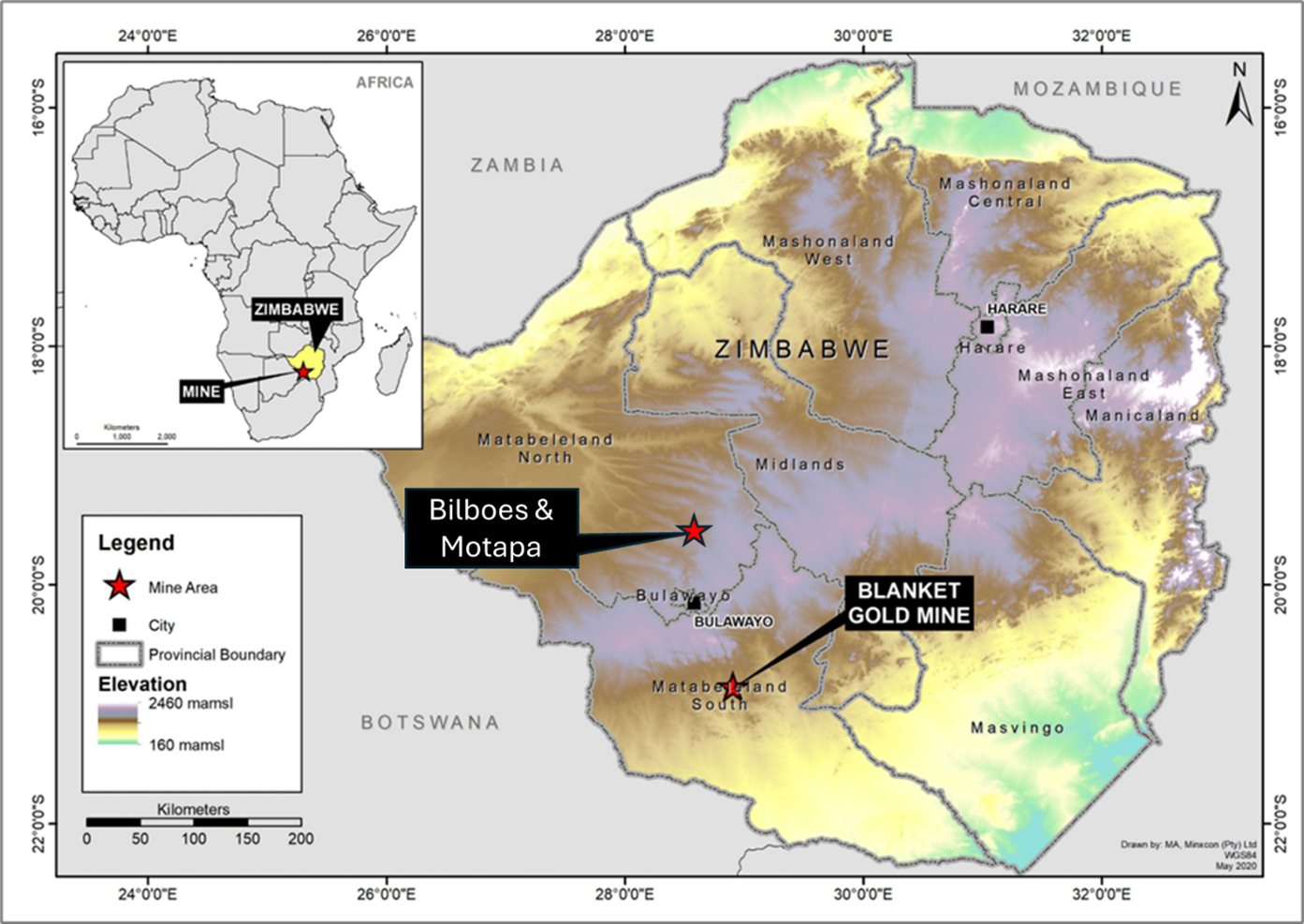
The locality of Motapa is shown relative to other material Caledonia group properties in Figure 1. Caledonia's Bilboes property, currently in the development stage, is located directly to the north of Motapa with the two properties sharing a lease boundary.
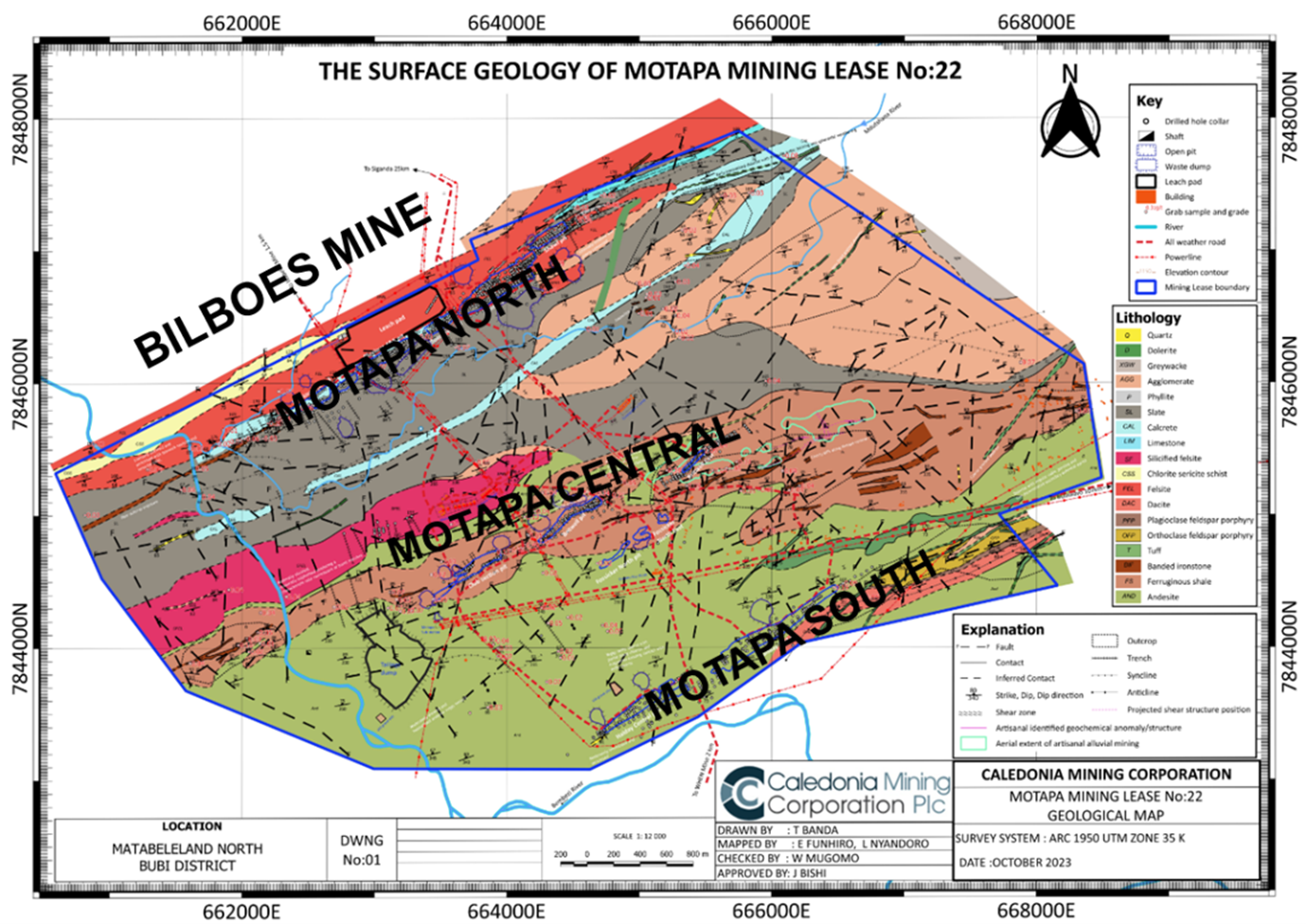
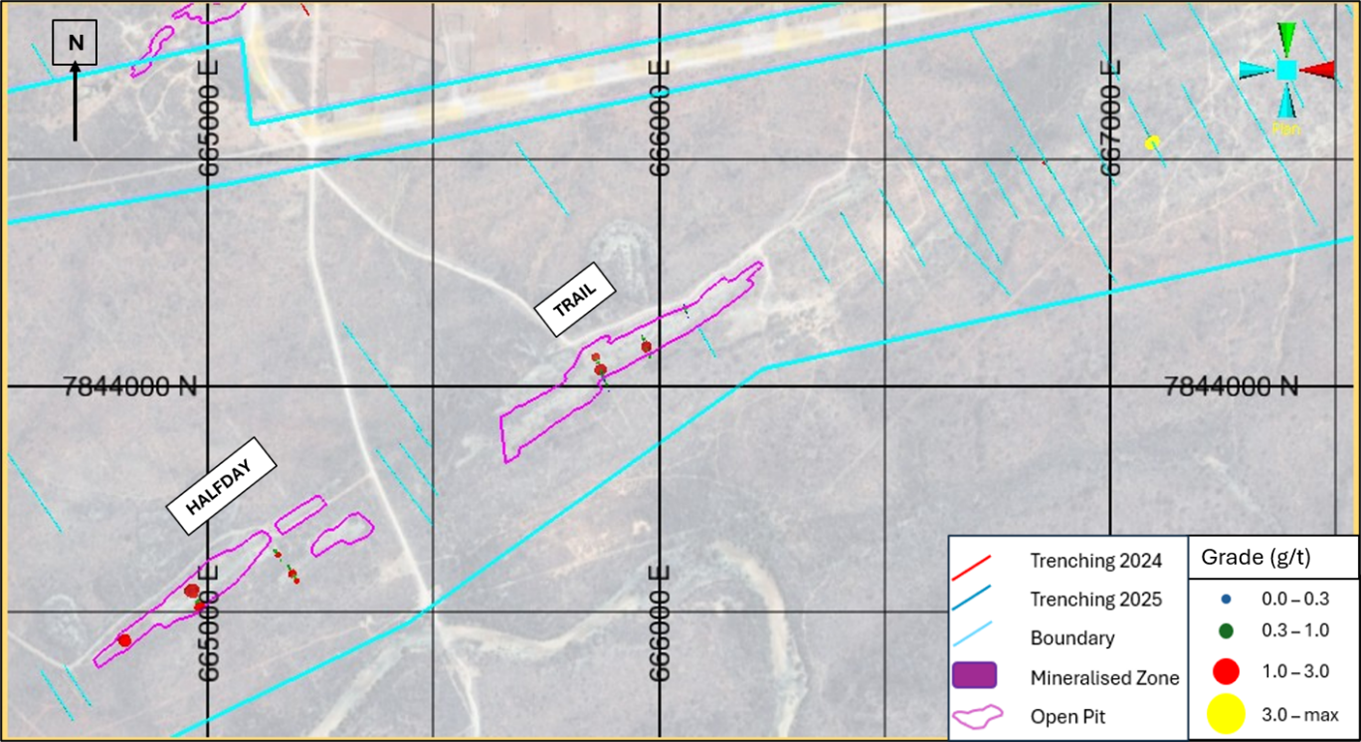
The mining lease area lies on the Bubi Greenstone Belt and occupies a c.6km stretch of an elongated northeast - southwest trending intensely sheared broad shear zone with three main mineralised footprints. Named from the north, these shear structures are Motapa North, Motapa Central and Motapa South (Figure 2).
Initial exploration activities at Motapa commenced in 2023 and comprised the following:
Detailed geological mapping of the tenement
Historical data collation of previous exploration and mining activities
Aero-magnetics flown by drone
Ground penetrating radar (LOZA) surveys to identify underground voids
The initial exploration activities completed in 2023 were used to define an exploration program for 2024 with 12,724m of trenching, 4,143m of DD and 5,433m of RC completed during 2024. Results of the exploration activities were released on 11 November 2024.
The 2025 activities comprised 22,364m of trenching, 1.561.78m of DD and 18,547m of RC drilling, focusing on the delineation of sulphide mineralisation at Motapa North and delineation of both oxide and sulphide mineralisation at Motapa Central (Mpudzi). The continued surface trenching for the identification of anomalous mineralisation at Motapa South and the remainder of the property continued with further anomalous areas identified that have no evidence of historical open pit workings.
Appendix
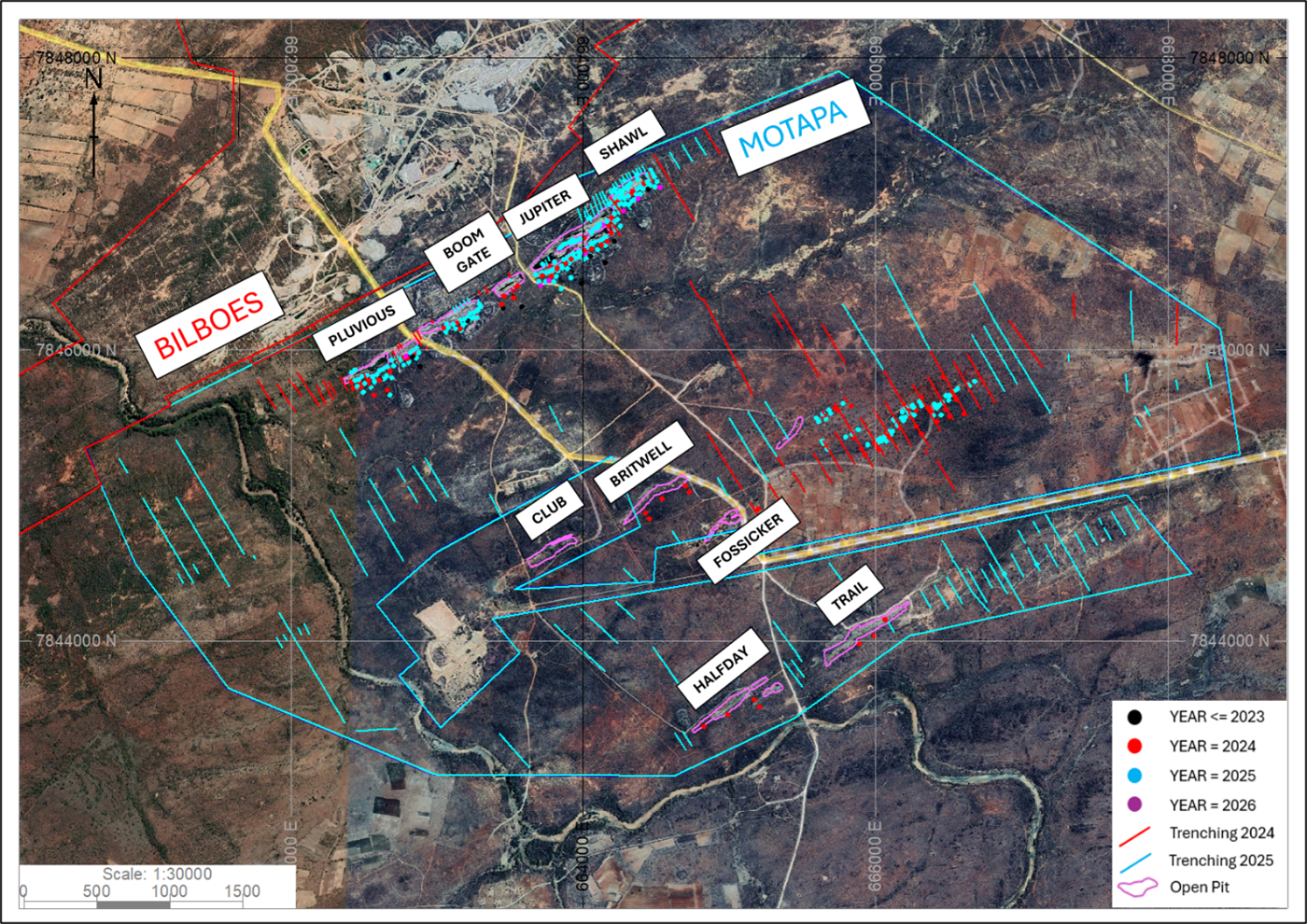
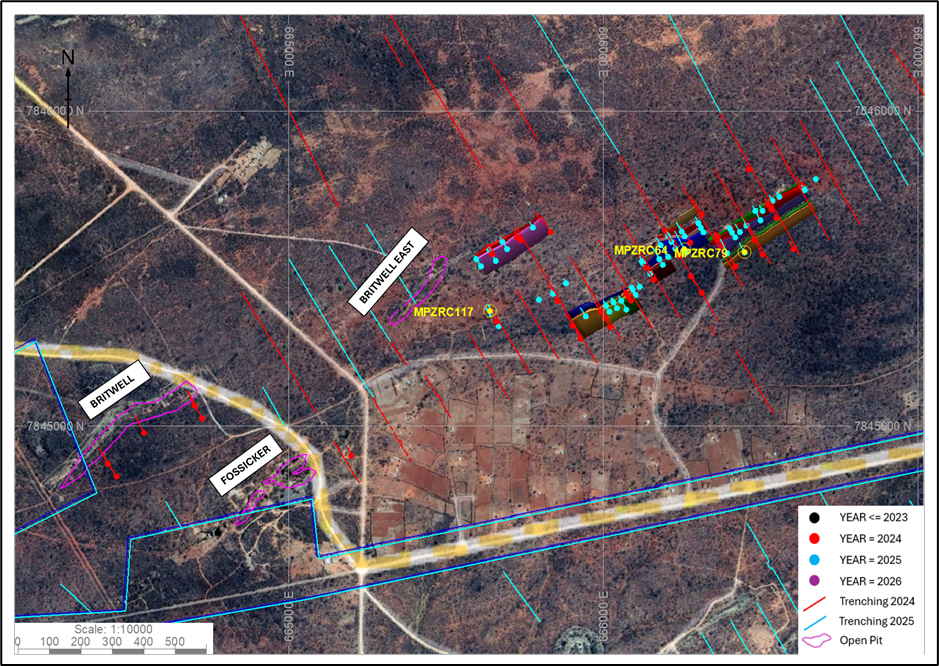
Figure 3 shows the locations of trenching sites and the drilling activities undertaken each year.
The drilling and trenching procedures together with an analysis of the Quality Assurance and Quality Control ("QAQC") procedures followed are provided further in the text.
Key Conclusions Regarding Work to Date
Motapa North
The historic oxide open pits are located approximately 250 meters to the south of the shared Bilboes property boundary and a few hundred meters further to the planned metallurgical facility at Bilboes.
The 2025 drilling campaign shifted primarily to an RC weighted drilling campaign with the lithological and structural setting of the project being well understood. At Motapa North, the following drilling activities took place across the various areas.
Table 1: Summary of drilling activities at Motapa North
The mineralized zones are characterized by a pinching and swelling effect which may locally pinch to approximately 0.50 meters true thickness and locally swell up to 17.1 meters true thickness in drillhole JPRC52.
Figure 4 provides drilling by year and shows the positions of the drillholes mentioned in the highlights for the Motapa North trend. Mineralisation envelopes have been interpreted from the drilling utilizing a composite length of 1.0 meters for the drillhole intersections and a grade cut-off of 0.30 grammes per tonne. This reveals the existence of multiple shears occurring along the Motapa North trend which may pinch or swell locally.
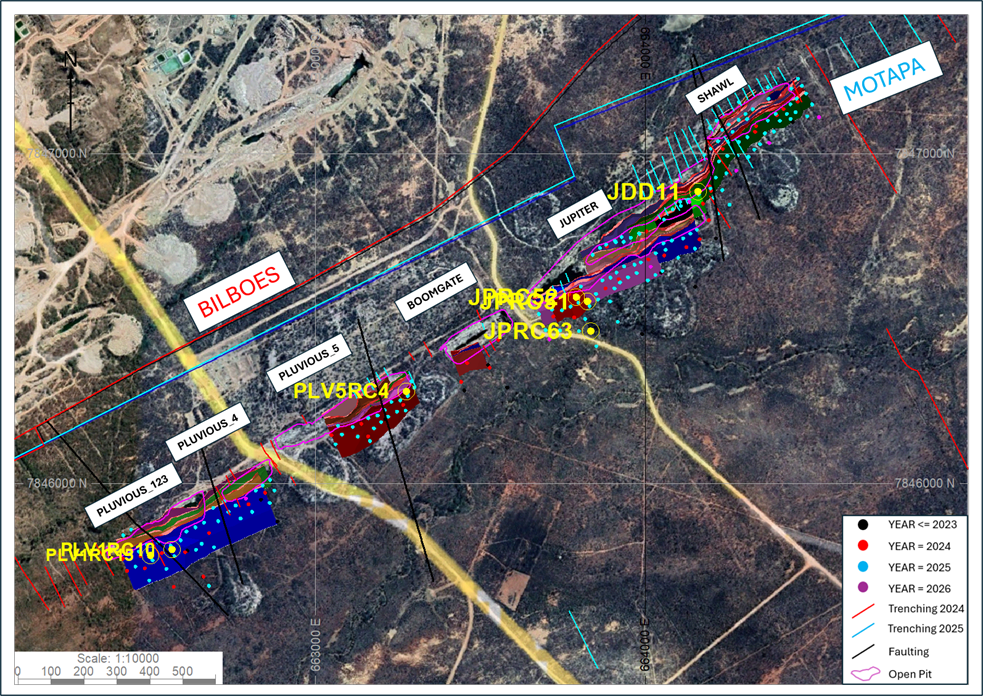
During the 2026 exploration year, infill drilling on certain section lines will take place and the gap areas between the open pits, specifically the Pluvious 123 and Pluvious 4 pits, and the area between the Jupiter and Shawl pits, will be tested for extensions to known mineralisation.
Figure 5 shows the grade variation across strike and dip which appears fairly uniform considering the nature and occurrence of mineralisation.
Motapa Central
Exploration activities during 2025 have been concentrated on the eastern portion of the Motapa Central trend in an area termed Mpudzi. The Mpudzi section has no historical open pits except for localized artisanal workings. The western portion of the Central trend was historically mined with oxide open pits and underground workings at the Club, Britwell and Fossicker sections to depths up to 330m below surface.
The mineralisation is associated with shear zones and banded iron formation exhibiting strong silicification of the host rock.
Drilling has confirmed the oxidized nature of the shallow mineralisation to a depth ranging from at surface to approximately 35m in certain localities. The continuing exploration will focus on defining the extent of the oxidized mineralisation at depth and along strike.
Motapa South
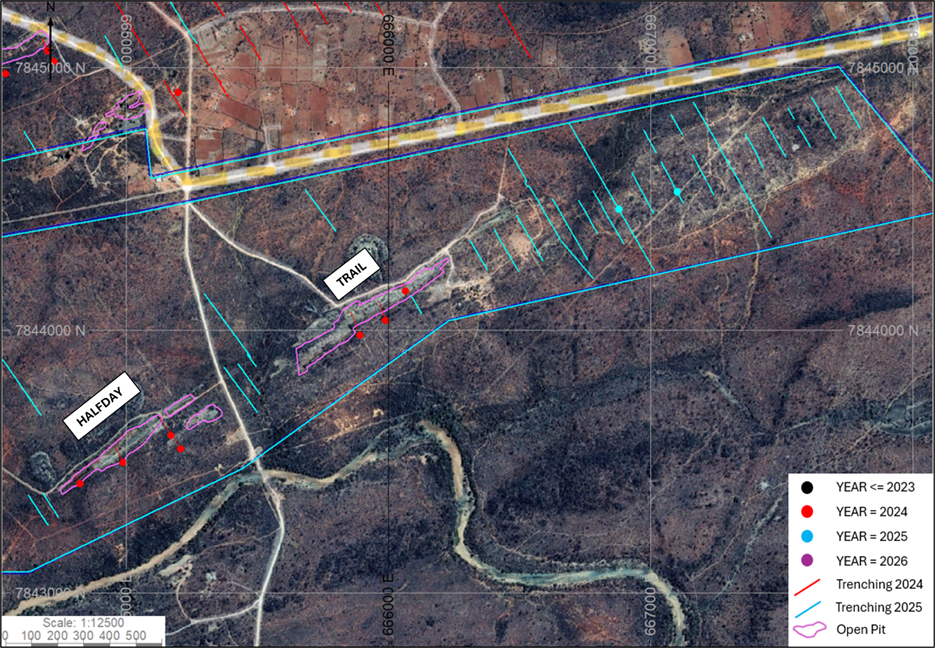
Limited drillholes were planned and executed at Motapa South due to the focus on the areas closer to the adjacent Bilboes property. Activity at Motapa South will increase in the following year as activities at those areas scale down. The drilling and trenching activities on Motapa South are shown in Figure 8.
Qualified person
Craig James Harvey, MGSSA, MAIG, Caledonia Vice President, Technical Services, has reviewed and approved the scientific and technical information contained in this news release. Craig James Harvey is a "Qualified Person" as defined by each of (i) the Canadian Securities Administrators' National Instrument 43-101 - Standards of Disclosure for Mineral Projects and (ii) sub-part 1300 of Regulation S-K of the U.S. Securities Act.
Trenching and trench sampling methodology
After the geologist has noted that the trench has successfully been excavated to bedrock, the sample intervals are set out on the side walls. At the start of the sample line, a peg is installed onto the floor with the trench number. A clean, exposed side of the trench is chosen and maintained throughout the sampling process. The sidewall is cleaned with a shovel to ensure an uncontaminated face is exposed for sampling. Thereafter sample localities are marked on the sidewall.
Sampling is done at one-meter intervals respecting lithological contacts, alterations and structures. A minimum sampling width of 0.3m and maximum of 1m are observed throughout the sample interval marking. A clean sample mat is placed on the floor of the trench and samples are chipped from the bedrock sidewall into a sample pan. Samples are ticketed and placed in a sample bag closed with twine. Sample tickets, locality and weights are recorded on the sample sheet record for each trench.
A total of 15% per batch consists of check samples comprising one standard, one field duplicate and one blank (Dolerite Dyke). Each batch contains a total of 20 samples inclusive of check samples. Trench samples are assayed on site by means of a bottle roll assay at the Isabella laboratory situated at Bilboes.
Samples above a cut-off grade of 0.10g/t bottle roll grade are selected for fire assay. These samples are composited and sent for analysis at an external laboratory.
The compositing of samples is guided by lithology as well as alteration domains; no sampling will be done across different domains. Outliers with anomalously high grades are not composited unless they are part of a homogenous lithological and alteration domain. When compositing in wider ore zones, a composite sample is made by combining five samples, whilst in narrow ore zones two samples will make up a composite sample. The homogenized sample is split using a riffle splitter to get two 2kg samples to be delivered to the external laboratory for bottle roll analysis and the other for fire assay.
Surface drilling survey
Two hundred and twelve (212) down-the-hole surveys were conducted on RC and DD holes which showed no major departures from the planned trajectory. All collar positions are surveyed in the field post drilling activities.
The RC and DD methodology is discussed below with the results obtained tabulated in Table 5 and the drill hole information tabulated in Table 6. Drill hole localities for Motapa North, Motapa Central and Motapa South are provided in Figure 4, Figure 5 and Figure 6 respectively.
DD methodology
After all geotechnical and structural logging is complete, the geologist inspects the core and delineates potential ore zones.
The geologist determines sampling depths, each sampling interval depending on lithological contacts, alterations, structures and quantity of sulphides with the maximum sampling width of 1m and minimum sampling width of 0.3meters. The sample depths are printed on a sampling sheet and need to be marked on the core before density determination can take place. The densities are measured before the core is cut. Sampling starts five meters away from the footwall contact and ends five meters away from the hangingwall contact to allow for sterilization.
Half core was sampled, with the other half remaining at the core shed for archiving.
Core segments were picked within demarcated and labeled intervals and put in respective sample bags. The samples are numbered as per the sampling plan with one ticket put into the respective sample bag, and the other onto the remaining piece of core where the sample would have been collected. The sample identification is also marked on the remaining half core.
At the end, sample bags are sealed with cable ties and weighed; with sample weights recorded on the sampling sheet.
The samples are then bagged into grain bags for dispatch to an outside accredited laboratory or storage prior to submission.
RC methodology
Checks for rig outlet and splitter cleanliness are conducted prior to the commencement of drilling activities and continuously throughout the drilling activities to avoid sample contamination.
Sample bags are pre-numbered with unique sample numbers (drill hole number and drill hole depth intervals) before the drilling commences. Sample depths recorded are relative to the ground surface at the drillhole collar. If no sample is recovered, such as when voids are intersected, the numbering sequence is continued uninterrupted with empty numbered bags inserted into the sample sequence. This will avoid possible confusion in sampling. Sample bags are immediately sealed to effectively prevent external contamination.
A sample bag is tied to the sample outlet of the rig in preparation for sample collection before sampling commences. Bulk samples are collected at 1m intervals and split using a riffle splitter to three samples. One sub-sample of 2kg will be taken to the lab for assaying, the second remains as a field duplicate for storage at the core shed and the third is prepared as chips for traying. The sampling crew will sample at the designated (one meter) intervals down the hole. The geologist verifies the intervals from the driller's marks on the mast or pull-down chain. For samples sent to the laboratory, the sampling quality is monitored continuously as the geologist ensures the samples for QAQC monitoring purposes are inserted in each sampling stream batch of 20 samples with CRMs being alternated from batch to batch from low, medium and high grade.
QAQC Procedures
A comprehensive QAQC program was implemented for the 2024-2025 drilling and sampling campaigns to ensure the reliability and integrity of assay data used for mineral resource estimation at the properties owned by the group.
The QAQC program includes the systematic insertion and monitoring of:
Certified Reference Materials (CRMs)
Blank samples (certified and field blanks)
Duplicate samples (field, coarse reject, and pulp duplicates)
QAQC samples were inserted at regular intervals within the sample stream and submitted to the same laboratories as primary samples. Analytical work was conducted primarily by accredited laboratories including Antech Laboratory Services and Performance Laboratories, both located in Zimbabwe, following industry-standard fire assay and/or appropriate multi-element analytical techniques.
For DD samples, a train comprising a single blank, CRM, LCR, and LPR reference sample is inserted into a batch of 20 samples. This process is repeated until the entire drillhole is completed with the CRMs being alternated from batch to batch (low, medium and high grade).
For RC samples, a train comprising a single blank, CRM, FDUP, and LPR reference sample is inserted into a batch of 20 samples. This process is repeated until the entire drillhole is completed with the CRMs being alternated from batch to batch (low, medium and high grade).
For trench sampling, a train comprising a single blank, CRM and FDUP reference sample is inserted into a batch of 20 samples. This process is repeated until the entire trench is completed with the CRMs being alternated from batch to batch (low, medium and high grade).
Every sampling sequence starts with a blank sample and ends with a blank sample. Analytical results for blanks, standards and duplicates are graphed and, if any fail, the entire batch is re-assayed. Batches that passed the QAQC graphs are then captured in the database. QAQC is monitored continuously.
Overall, a compliance rate of 92.2% was achieved for the CRM QAQC analysis. The CRM, blank and duplicate samples are summarized in Table 2 below.
Table 2: QAQC Results from DD and RC Drilling Activities
FDUP - field duplicate, LCR - lab coarse repeat, LPR - lab pulp repeat, CRM - certified reference material, Blank - Dolerite Dyke
% Insertion * reported relative to 13,963 analytical samples excluding any CRMs, blanks or duplicates
%* Reported relative to 13,963 analytical samples excluding any CRMs, blanks or duplicates
The QAQC dataset for CRM material demonstrates an overall CRM compliance rate of 92.2%, supporting reasonable confidence in the analytical data. However, the identified underperformance of specific standards (notably AMIS0786) requires further investigation.
A total of 1,419 blank samples were evaluated, comprising 1,143 CRM blanks and 276 field blanks. CRM blank expected values are constant and observed assay values are consistent with expected low concentrations and show no evidence of systematic bias. Field blanks confirm the absence of contamination trends or analytical bias with minor isolated elevated values. The large blank dataset provides a sufficient confidence that contamination is effectively controlled within the sampling and analytical process.
The duplicate assay datasets show strong positive correlations between original and repeat values across all duplicate types. LCR and LPR indicate acceptable laboratory precision, while FDUP shows the greater variability expected from field duplicates in a nuggety gold system. No major systematic bias is evident, although moderate scatter is present, particularly at low grades and in field duplicates. Overall, the duplicate data are consistent with an acceptable gold-assay QAQC programme for mineral resource work.
The drillhole intersections with assay values above 0.50 g/t are provided in Table 3. The drillhole collars and survey information are provided in Table 4.
Enquiries:
Table 3: RC and DD Drilling Results
Notes :
RC and DD drillholes for 2025 only.
Drillholes are reported using a 0.50 g/t cut-off grade.
True widths are approximate calculations.
Table 4: RC and DD Drilling Collar and Survey Information
Glossary
Note: This announcement contains inside information which is disclosed in accordance with the Market Abuse Regulation (EU) No. 596/2014 ("MAR") as it forms part of UK domestic law by virtue of the European Union (Withdrawal) Act 2018 and is disclosed in accordance with the Company's obligations under Article 17 of MAR.
Cautionary Note Concerning Forward-Looking Information
Information and statements contained in this news release that are not historical facts are "forward-looking information" within the meaning of applicable securities legislation that involve risks and uncertainties relating, but not limited, to Caledonia's current expectations, intentions, plans, and beliefs. Forward-looking information can often be identified by forward-looking words such as "anticipate", "believe", "expect", "goal", "plan", "target", "intend", "estimate", "could", "should", "may" and "will" or the negative of these terms or similar words suggesting future outcomes, or other expectations, beliefs, plans, objectives, assumptions, intentions or statements about future events or performance. Examples of forward-looking information in this news release include: the opportunity for Motapa to evolve into a strategic extension of the Bilboes mining complex, potentially enhancing production and extending the life of mine at Bilboes through the development of a combined mining operation, the potential for shared infrastructure and operational synergies, which could enhance project economics and reduce capital intensity over time, the expectation that the group will publish a maiden mineral resource estimate for portions of Motapa in Q3 2026, the potential to significantly enhance the long-term value of the Bilboes project, the opportunity to define a substantial resource in close proximity to the planned infrastructure at Bilboes and the opportunity to extend mine life and increase future production across a combined mining complex. This forward-looking information is based, in part, on assumptions and factors that may change or prove to be incorrect, thus causing actual results, performance or achievements to be materially different from those expressed or implied by forward-looking information. Such factors and assumptions include, but are not limited to: failure to establish estimated resources and reserves, the grade and recovery of ore which is mined varying from estimates, success of future exploration and drilling programs, reliability of drilling, sampling and assay data, assumptions regarding the representativeness of mineralization being inaccurate, success of planned metallurgical test-work, capital and operating costs varying significantly from estimates, delays in obtaining or failures to obtain required governmental, environmental or other project approvals, inflation, changes in exchange rates, fluctuations in commodity prices, delays in the development of projects and other factors.
Exploration results that include geophysics, sampling, and drill results on wide spacings may not be indicative of the occurrence of a mineral deposit. Such results do not provide assurance that further work will establish sufficient grade, continuity, metallurgical characteristics and economic potential to be classed as a category of mineral resource. A mineral resource that is classified as "inferred" or "indicated" has a great amount of uncertainty as to its existence and economic and legal feasibility. It cannot be assumed that any or part of an "indicated mineral resource" or "inferred mineral resource" will ever be upgraded to a higher category of mineral resource. Investors are cautioned not to assume that all or any part of mineral deposits in these categories will ever be converted into proven and probable mineral reserves.
Security holders, potential security holders and other prospective investors should be aware that these statements are subject to known and unknown risks, uncertainties and other factors that could cause actual results to differ materially from those suggested by the forward-looking statements. Such factors include, but are not limited to: risks relating to estimates of mineral reserves and mineral resources proving to be inaccurate, fluctuations in gold price, risks and hazards associated with the business of mineral exploration, development and mining, risks relating to the credit worthiness or financial condition of suppliers, refiners and other parties with whom the Company does business; inadequate insurance, or inability to obtain insurance, to cover these risks and hazards, employee relations; relationships with and claims by local communities and indigenous populations; political risk; risks related to natural disasters, terrorism, civil unrest, public health concerns (including health epidemics or outbreaks of communicable diseases such as the coronavirus (COVID-19)); availability and increasing costs associated with mining inputs and labour; the speculative nature of mineral exploration and development, including the risks of obtaining or maintaining necessary licenses and permits, diminishing quantities or grades of mineral reserves as mining occurs; global financial condition, the actual results of current exploration activities, changes to conclusions of economic evaluations, and changes in project parameters to deal with unanticipated economic or other factors, risks of increased capital and operating costs, environmental, safety or regulatory risks, expropriation, the Company's title to properties including ownership thereof, increased competition in the mining industry for properties, equipment, qualified personnel and their costs, risks relating to the uncertainty of timing of events including targeted production rate increase and currency fluctuations. Security holders, potential security holders and other prospective investors are cautioned not to place undue reliance on forward-looking information. By its nature, forward-looking information involves numerous assumptions, inherent risks and uncertainties, both general and specific, that contribute to the possibility that the predictions, forecasts, projections and various future events will not occur. Caledonia undertakes no obligation to update publicly or otherwise revise any forward-looking information whether as a result of new information, future events or other such factors which affect this information, except as required by law.
For a more detailed discussion of such risks and other factors that may affect the Company's ability to achieve the expectations set forth in the forward-looking statements contained in this news release, see the Company's latest 20-F and Management's Discussion and Analysis, each under the heading "Risk Factors", available on the SEDAR website at www.sedar.com or on EDGAR at www.sec.gov. The foregoing should be reviewed in conjunction with the information and risk factors and assumptions found in this news release.
This news release is not an offer of the shares of Caledonia for sale in the United States or elsewhere. This news release shall not constitute an offer to sell or the solicitation of an offer to buy, nor shall there be any sale of the shares of Caledonia, in any province, state or jurisdiction in which such offer, solicitation or sale would be unlawful prior to registration or qualification under the securities laws of such province, state or jurisdiction.
SOURCE: Caledonia Mining Corporation Plc
View the original press release on ACCESS Newswire
 Share
Share
 Tweet
Tweet
 Share
Share
 Flip
Flip
 Email
Email
Subscribe and Follow
Get a daily dose of BC Post news through our daily email, its complimentary and keeps you fully up to date with world and business news as well.


News RELEASES
Publish news of your business, community or sports group, personnel appointments, major event and more by submitting a news release to BC Post.
More InformationUS court strikes down Trump-era H-1B visa surcharge

BOSTON, Massachusetts: A federal judge has invalidated a $100,000 fee imposed by President Donald Trump on new H-1B visas, ruling that...
Iran, Israel stop firing on each other after Trump tells them to
DUBAI/JERUSALEM: Iran and Israel said on June 8 that they had stopped attacking each other after U.S. President Donald Trump urged...
11 dead in violence in Pakistan-administered Kashmir before protest
MUZAFFARABAD, PoJK: Clashes in Pakistan-occupied Jammu and Kashmir ahead of a protest planned for June 9 left 11 people dead and more...
UN food agency warns that countries face hunger because of Iran war

UNITED NATIONS: The U.N.'s food agency says the Iran war is pushing millions more people into serious hunger, as it had warned would...
Fuel shock and aircraft shortages test airline recovery

RIO DE JANEIRO, Brazil: Airline executives from around the world are meeting in Rio de Janeiro this weekend amid growing concerns that...
Learn from Ukraine, Gulf wars on defense spending, Taiwan advised

TAIPEI, Taiwan: Taiwan should use its defense money more wisely and learn from the wars in Ukraine and the Middle East, especially...
Hardik Pandya ruled out of Afghanistan ODIs due to injury: Sources

By Vipul Kashyap New Delhi [India], June 10 (ANI): Star all-rounder Hardik Pandya has been ruled out of the upcoming three-match...
Iraq lose to Venezuela, Saudi Arabia draw with Senegal in World Cup warm-ups

Pennsylvania [US], June 10 (ANI): Iraq suffered a 2-0 defeat against Venezuela in their final FIFA World Cup 2026 warm-up friendly...
Sal Stewart bashes go-ahead homer in 11th as Reds top Padres

(Photo credit: Denis Poroy-Imagn Images) Sal Stewart clouted a two-run homer in the 11th inning Tuesday night and the visiting Cincinnati...
Reports: Victor Wembanyama won't get flagrant-1 for Game 3 shove

(Photo credit: Geoff Burke-Imagn Images) NEW YORK -- San Antonio Spurs star Victor Wembanyama won't receive a retroactive flagrant...
Early offense sparks Nationals to another win over Giants

(Photo credit: Stan Szeto-Imagn Images) Luis Garcia Jr. hit the 11th pitch of the game for a two-run homer, James Wood had three...
A's continue HR barrage against Brewers to even series

(Photo credit: Lucas Peltier-Imagn Images) LAS VEGAS -- Tyler Soderstrom and Nick Kurtz each homered for the third time in two games...
